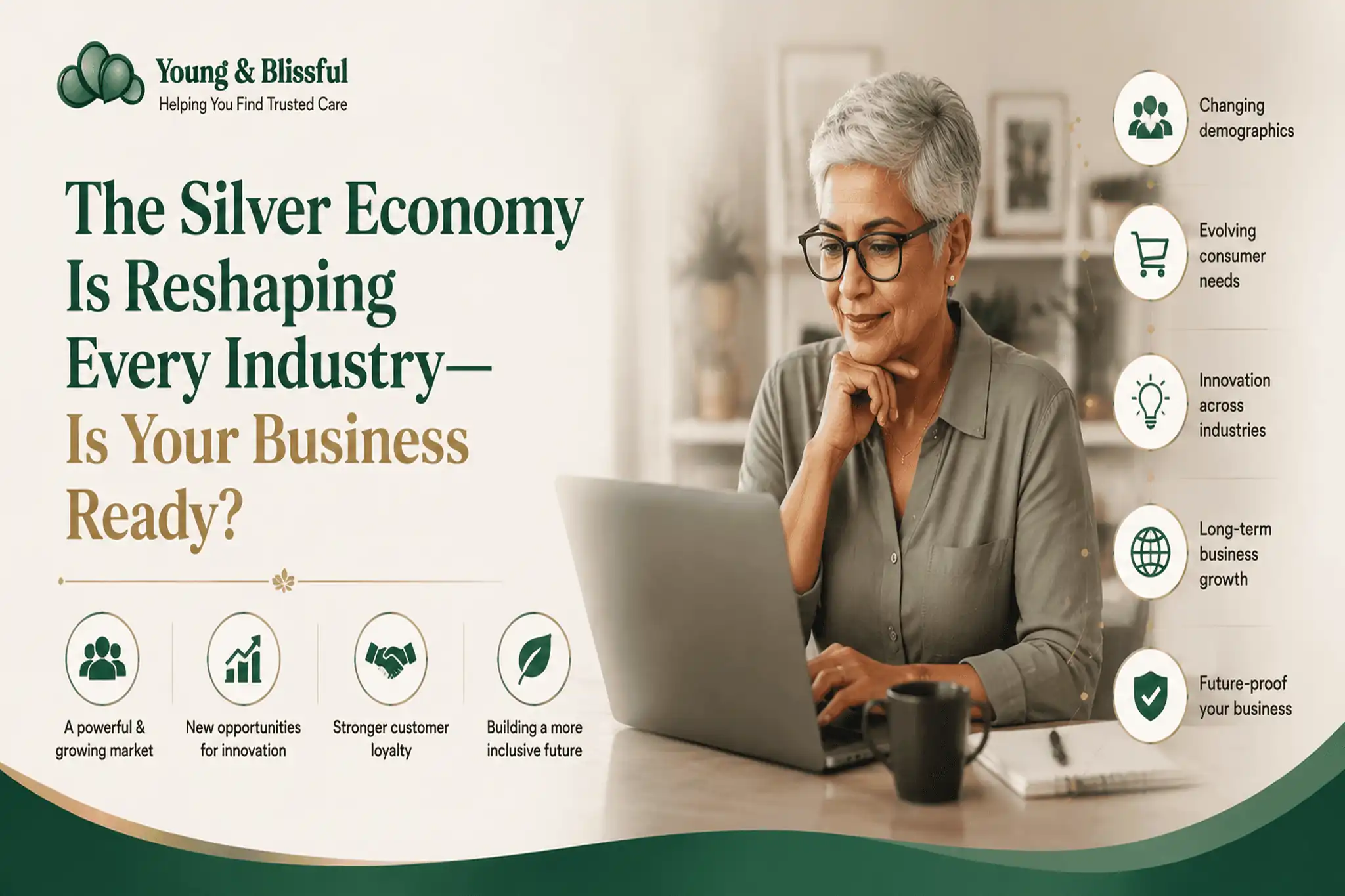
The silver economy is not a niche idea. It is a practical business reality shaped by longer lives, more caregiving responsibilities, changing household needs, and growing demand for services that help people age with more support and less friction. In Ontario, the silver economy reaches well beyond healthcare. It affects how people choose transportation, housing, home modifications, legal support, technology help, mobility products, and local day-to-day services.
For many businesses, the opportunity is already here. Families are searching for providers who feel trustworthy, accessible, and easy to understand. Businesses that prepare now can become easier to find, easier to choose, and easier to recommend. Businesses that do not adapt may stay invisible to one of the most important customer groups in the province.
Quick Answer
- The silver economy refers to the economic activity connected to older adults, caregiving families, and the services, products, and systems that support aging well.
- In Ontario, the silver economy affects far more than healthcare. It is changing how families choose housing, transportation, home services, financial support, legal planning, technology, and wellness options.
- Businesses that adapt early can earn trust, improve local visibility, and become easier for seniors and caregivers to choose.
- Readiness depends on clear messaging, accessible service design, responsive communication, and a better understanding of how older adults actually make decisions.
What is the silver economy in plain language?
The silver economy is the economic activity connected to older adults and the systems that support later life. It includes not only direct senior care, but also caregiving, housing decisions, transportation, financial planning, home services, mobility products, technology support, and community participation.
In practice, the silver economy appears whenever a business solves a problem related to aging, independence, caregiving, or life transitions. A business does not need to be a healthcare provider to be part of it. It only needs to be relevant to the needs of older adults and families.
Why the silver economy reaches every industry
Aging changes daily routines, homes, schedules, priorities, and decision timelines. It affects how people move through a community, where they live, how they shop, who helps them, and what kind of support they need to remain independent.
That means real estate professionals may need to speak more clearly about accessibility and downsizing. Contractors may need to explain aging-in-place upgrades more simply. Technology businesses may need to make device support feel less intimidating. Transportation providers may need to show how they support appointments, errands, and caregiver coordination. Even fitness and wellness businesses may need to think more carefully about comfort, safety, pace, and trust.
What Ontario businesses should be watching
Ontario businesses should watch for a few patterns. One is the rise of family-assisted decision-making. Another is the growing importance of local search and comparison behaviour for senior-related services. A third is the fact that many people do not identify as “seniors” even when they are in the 55+ or 65+ market, so tone and positioning matter.
Businesses should also pay attention to service bundling and cross-referral opportunities. A family looking for one service often uncovers several others. A business that understands adjacent needs can create better partnerships and a stronger role in the wider care ecosystem.
How to tell if your business is ready
A ready business can answer five simple questions quickly. Who is the service for? What problem does it solve? What does the next step look like? What geographic areas do you serve? Why should a family trust you with an older adult’s needs?
If those answers are difficult to find on a website, in a listing, or in a first call, the business is not fully ready. If staff are unsure how to speak to caregivers, if pricing is difficult to understand, or if the business has no clear local search visibility, there is work to do.
Where the opportunity is strongest
The strongest opportunities often sit in practical, everyday friction points: getting to appointments, staying safe at home, managing memory-related routines, coordinating multiple services, adapting a home, reducing caregiver stress, or making a major life transition less overwhelming.
Businesses that grow well in the silver economy tend to remove friction rather than add it. They simplify, clarify, reassure, and support decision-making. That applies whether the business offers therapy, transportation, home support, mobility products, financial advice, or technology setup.
How Young & Blissful supports this environment
Young & Blissful frames itself as a marketplace and discovery platform rather than a direct provider. That is important in the silver economy because families often need a starting point for comparison, not just another advertisement.
A strong marketplace presence can help businesses become easier to find in a context where local visibility, category relevance, and trust signals all matter. For families, it can create a clearer pathway into research when they are not yet sure which service they need first.
Action Steps for Ontario Businesses
The best readiness plans are simple. Review your service through three questions: does the offer match a real aging-related need, does the business explain that need clearly, and does the intake process feel manageable to a stressed family? If one of those pieces is weak, readiness is incomplete.
Ontario businesses can also benefit from mapping adjacent needs. A transportation provider may discover referral opportunities with medical services, community programs, and caregiver support. A home modification company may fit naturally alongside mobility, housing, and occupational therapy referrals. The silver economy rewards businesses that understand the wider journey, not only their own lane.
This is also the right time to strengthen content, listings, and trust signals. Families increasingly move between search results, maps, directories, and AI-generated answers. A business that is well explained in only one place may still remain invisible in the wider decision journey.
How to Compare Providers Before You Contact Them
When the topic is high-intent, comparison matters. Families usually want to know who serves their location, whether the business works with older adults regularly, how quickly someone will respond, and whether pricing or next steps are explained in a straightforward way.
Businesses that make comparison easier reduce hesitation. That can improve local conversion even before paid advertising changes.
What a readiness review should include
A strong readiness review should look at the full customer path, not just marketing. The business should ask whether seniors and caregivers can discover the service, understand it quickly, compare it confidently, contact someone easily, and move into a clear next step. Many businesses only review the first part of that journey.
The review should also include operations. If the business promises a calm, supportive experience but delivers confusing intake, slow replies, or inconsistent answers, readiness is still weak. Silver-economy growth depends as much on follow-through as on visibility.
Finally, readiness should include partnership thinking. Many older adults and caregivers need more than one service. Businesses that understand how they connect to nearby providers can create better referral loops and a stronger local reputation.
Provider Checklist
- Is the business easy to understand within the first few seconds of landing on the page?
- Does the website clearly say who the service is for and which Ontario areas are served?
- Can a senior, caregiver, or adult child understand the next step without guessing?
- Is contact information easy to find on both desktop and mobile?
- Are service descriptions practical, specific, and free of vague jargon?
- Does the business show trust signals such as reviews, experience, or relevant credentials where appropriate?
- Can caregivers or adult children be included in planning or first-contact conversations?
- Does the intake process reduce friction instead of adding it?
Related Services to Explore on Young & Blissful
- Technology Help for Seniors: useful when digital access, communication, reminders, or scam prevention become important.
- Transportation: useful when getting to appointments, errands, or programs becomes difficult.
- Housing, Retirement & Long-Term Care: useful when a housing transition becomes part of the decision journey.
- Caregiver Support: useful when families need emotional support, coordination help, or respite.
FAQs
What is the silver economy?
The silver economy is the broad market created by older adults and the people, services, products, and systems involved in aging, caregiving, independence, and later-life planning.
Does the silver economy only apply to senior care providers?
No. It also affects real estate, transportation, legal services, financial planning, home modifications, wellness businesses, technology companies, and other local services.
Why should local businesses in Ontario care about this now?
Ontario families are actively looking for trusted, accessible, local support. Businesses that ignore this shift may miss an important source of future demand.
What makes a business more ready for the silver economy?
A business is more ready when it uses clear language, responds quickly, explains services simply, supports caregivers, and removes barriers for older adults.
How can small businesses benefit without a large budget?
Many improvements are low-cost. Clearer website copy, better calls to action, stronger Google Business Profile details, and a better intake experience can make a meaningful difference.
How can Young & Blissful help?
Young & Blissful can help businesses think about visibility, comparison, and discoverability in a senior-focused marketplace context across Ontario.
Key Takeaways
- The Ontario aging market affects more than healthcare and should be treated as a strategic business opportunity.
- Seniors rarely make decisions in isolation. Caregivers, spouses, and adult children often influence the final choice.
- Trust, accessibility, clarity, and ease of comparison matter strongly in senior-related decision-making.
- Businesses that reduce friction often improve both customer experience and conversion performance.
- Young & Blissful can act as a marketplace starting point for families comparing local senior-focused services across Ontario.
Conclusion + Soft CTA
The silver economy is not a trend to watch from a distance. It is already influencing how families search, compare, and choose services across Ontario. Businesses that adapt their message, accessibility, and customer journey can become easier to trust and easier to find. If your organization serves older adults or caregiving families, Young & Blissful can be a helpful marketplace starting point for visibility and discovery.