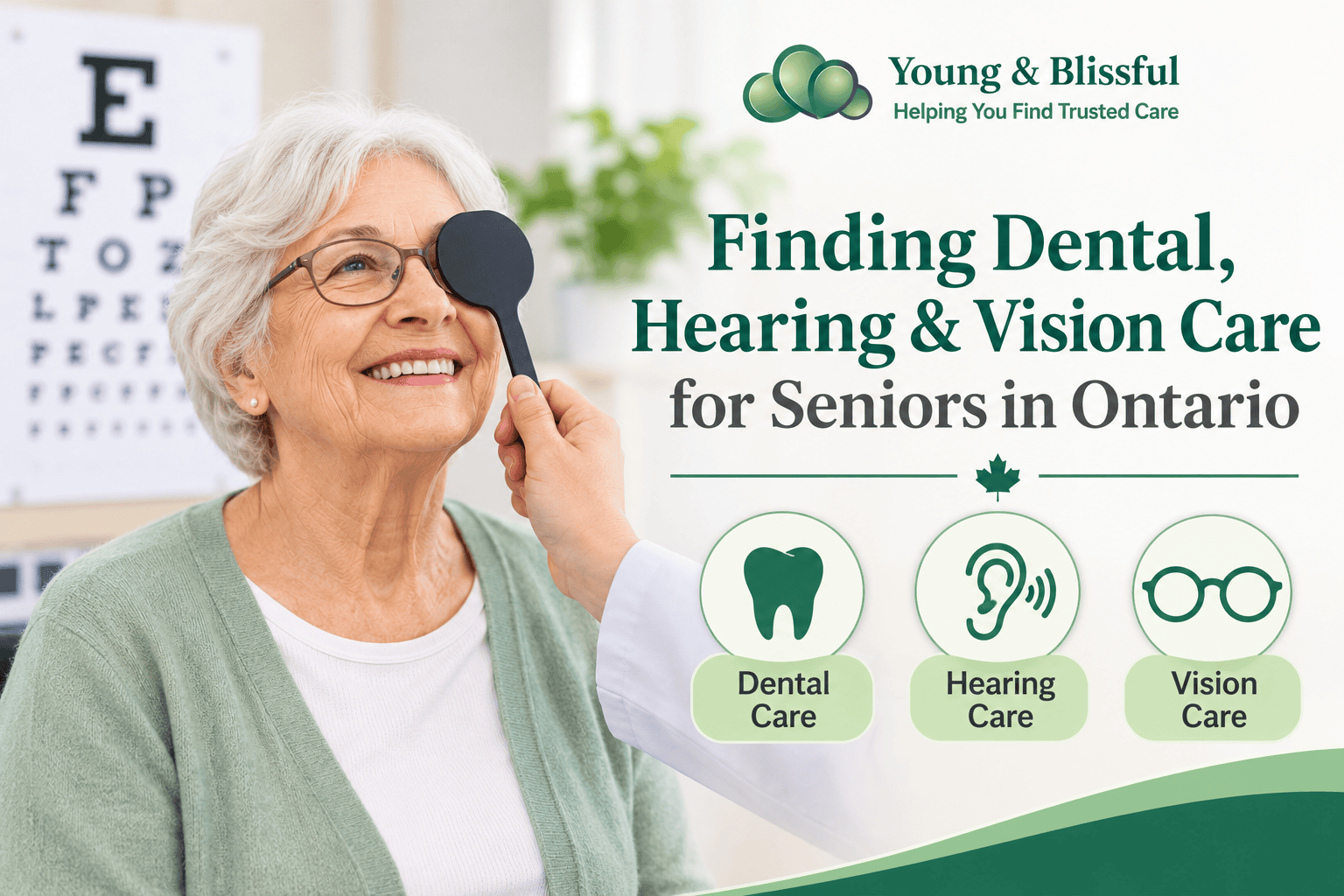
Three appointments can be difficult to organize when each involves a different type of provider, a different insurance rule and a different question about cost. A dentist may ask whether the patient has the Canadian Dental Care Plan. An audiologist may discuss hearing aids and possible Ontario equipment funding. An optometrist may ask about a medical condition to determine what eye-exam coverage applies. For Ontario seniors, a good care plan starts by separating these services, then confirming eligibility and total out-of-pocket costs before an appointment.
Quick answer: where to begin
- Dental: Check whether the person qualifies for the federal Canadian Dental Care Plan (CDCP) and whether the provider participates.
- Hearing: Seek an appropriate hearing assessment; eligible people may receive equipment help through Ontario’s Assistive Devices Program (ADP).
- Vision: Confirm current OHIP eye-exam eligibility with an optometrist and ask about glasses, tests and treatments that may not be insured.
- All three: Choose accessible providers with clear communication, written estimates and experience serving older adults.
Dental care: start with coverage, not the appointment fee
Regular dental services in dentists’ offices are not generally covered by OHIP. The Canadian Dental Care Plan is a separate federal program for eligible residents without access to private dental insurance and who meet other requirements. Canada’s official eligibility page says applicants must meet all four conditions, including filing Canadian tax returns, adjusted family net income below $90,000, Canadian tax residency and no access to qualifying private dental coverage (subject to specific exceptions).
That last condition deserves attention. Someone may have a pension-related dental plan they rarely use, yet still have *access* to insurance under program rules. Do not assume eligibility because a person is retired or has not visited a dentist in years. Ask the family to review the government’s current requirements and renewal process.
The CDCP may not cover every dollar. Depending on income, the federal plan pays a portion of eligible services according to its established fees, and the provider may charge amounts above those fees or for uncovered services. Ask the dental office for a written treatment plan, an estimate of what the CDCP will reimburse and the amount the patient must pay before agreeing to major treatment.
Official resource: Canadian Dental Care Plan eligibility.
How to choose dental providers for older adults
Ask whether the practice accepts and bills the CDCP, what kinds of treatment are available, and whether care can be adapted for limited mobility, dementia-related needs or dental anxiety. For someone with dentures, a denture clinic or denturist may also be relevant, depending on the issue. Clarify the provider’s registration and professional role. If travel is difficult, ask about accessibility or legitimate mobile services, but do not assume all procedures can be done at home.
If a senior has pain, swelling, bleeding or a problem affecting eating, seek timely professional advice. A directory can help locate practices but cannot determine whether a symptom requires urgent attention.
Hearing care: assessment before purchasing a device
Hearing difficulty can show up as missing conversation in a noisy restaurant, turning up television volume or avoiding gatherings because listening feels tiring. These observations are reasons to discuss a hearing assessment, not enough to diagnose a specific cause. A qualified hearing professional can explain the testing process and discuss options suited to the person’s needs.
Hearing aids vary in fit, technology, support and ongoing maintenance. Ask whether the quote includes testing, fitting, follow-up adjustments, batteries or charging accessories, repairs and trial or return terms. If someone promises a device will “restore perfect hearing,” treat that claim cautiously. The goal is realistic improvement in the situations the person cares about.
Can Ontario fund hearing aids?
Ontario’s Assistive Devices Program may help eligible residents pay for certain hearing aids and other devices. Qualification requires program criteria, and funding arrangements depend on the device. An authorized professional and registered vendor process may be involved. Funding should be checked before purchase. In some circumstances, Ontario Works or ODSP may offer other device-related assistance, subject to those programs’ rules.
Do not apply a mobility-equipment subsidy figure to every hearing product; coverage varies by category. Ask the provider which device is eligible, whether they are registered with ADP and what will remain payable by the client.
Official resource: Ontario Assistive Devices Program.
Vision care: separate eye exams from eyewear
For Ontario residents 65 and older without a qualifying medical eye condition, the current OHIP guidance covers one major eye examination every 18 months and up to two additional minor follow-up assessments. Different coverage rules may apply when a person has certain eligible eye conditions. Glasses, contact lenses and optional features may not be covered by OHIP. Because coverage details can change, confirm eligibility before booking rather than assuming every annual routine examination is free.
Ask whether the appointment includes a comprehensive examination, whether extra diagnostic tests carry fees, and what happens if a specialist referral is advised. For mobility or hearing barriers, explain them while booking so staff can adapt communication and the appointment setup.
Official resource: What OHIP covers.
Three practical provider comparisons
| Care area | What to verify | Potential cost question |
| Dental | Professional registration, CDCP participation, treatment plan | What does the plan reimburse and what must I pay? |
| Hearing | Assessment credentials, device fitting and support | Are adjustments, batteries and repairs included? |
| Vision | OHIP exam eligibility, scope and accessibility | Are any tests or glasses billed separately? |
The most useful comparison is not just “Who is closest?” A provider farther away but with accessible transport or the required language support may be a better practical fit. Conversely, someone with several appointments may prioritize local accessibility. Families should also ask about consent, how information is shared and whether an adult child may be included in discussions at the senior’s request.
What to prepare before the first visit
Bring a current medication list when requested, any relevant previous test or prescription information and a written summary of the concern. If the senior uses hearing aids, glasses, a mobility aid or communication supports, mention this at booking. Decide who will arrange the ride home and what instructions must be remembered after the visit. Keep copies of written estimates and receipts for benefit claims.
For a senior with multiple care providers, a single folder with dates, diagnoses or findings shared by professionals, recommended follow-up and contact details can reduce confusion. Keep the information private and share only what is necessary.
Common mistakes
Do not assume OHIP, CDCP and ADP are interchangeable. They serve different purposes. Avoid buying hearing devices before checking funding or agreeing to dental work before understanding uncovered charges. Do not rely on a generic “senior discount” claim as proof of overall affordability. And do not postpone professional assessment when pain, sudden hearing change, sudden vision change or other concerning symptoms occur.
Frequently asked questions
Does OHIP pay for regular dental checkups?
Regular dentistry in a dental office is generally not an OHIP benefit. Eligible residents may qualify for the separate federal CDCP.
Is the Canadian Dental Care Plan only for people 65 and older?
No. The federal program has eligibility rules that are not simply an age threshold. Review the current Government of Canada requirements.
Does the CDCP pay every dental bill in full?
Not necessarily. Co-payments, charges above CDCP fees and services outside the plan may leave an out-of-pocket balance.
Can Ontario help pay for hearing aids?
The Ontario Assistive Devices Program can help eligible people with approved hearing devices. Assessment, vendor and funding rules apply.
Are eye exams covered for seniors in Ontario?
OHIP covers eligible examinations for people 65 and older, with a specific schedule that depends on medical eligibility. Confirm current rules with the eye-care provider.
Are eyeglasses covered by OHIP?
Routine glasses and contact lenses generally are not. Certain social assistance or private benefits may help, subject to program rules.
How can I compare providers if my parent needs language support?
Ask whether the office has staff or interpretation options in the preferred language, and whether consent and written instructions can be explained clearly.
Key takeaways
Dental, hearing and vision care have different assessment and payment systems. Check CDCP, OHIP and ADP separately; request written estimates; and choose accessible professionals who communicate clearly. The right care is easier to arrange when families know the precise questions to ask.
Explore options: Find medical, dental and wellness providers through Young & Blissful. Confirm professional registration, coverage and appointment availability with the provider.
*Educational information only; it does not replace individual dental, hearing or medical advice.*
References
- Government of Canada, CDCP eligibility.
- Government of Canada, CDCP coverage and co-payments.
- Government of Ontario, Assistive Devices Program.
- Government of Ontario, What OHIP covers.