The modern caregiver is often invisible in business planning, yet caregivers influence an enormous number of local service decisions across Ontario. A caregiver may be an adult child helping a parent stay safe at home, a spouse coordinating appointments, or a family member juggling work, family life, and the logistics of aging support. Many are doing all of this while feeling tired, stretched, and pressed for time.
For businesses, that means the caregiver is not a side audience. The caregiver is often a key buyer, researcher, coordinator, and decision partner. Businesses that understand this can improve trust, shorten the path to contact, and create a better customer experience for both older adults and families. Businesses that ignore caregivers often create confusion without realizing it.
Quick Answer
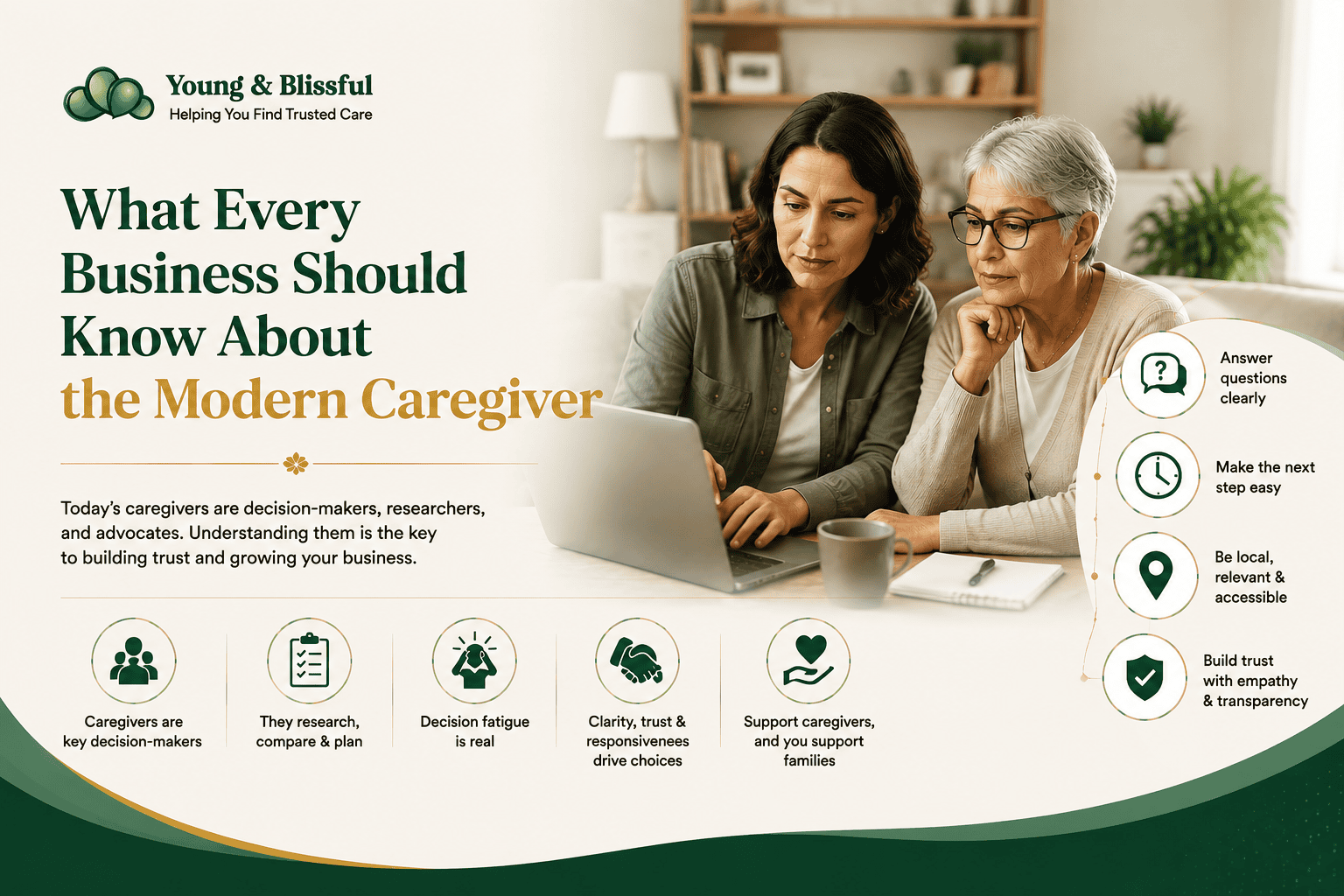
- The modern caregiver is often an adult child, spouse, or family member managing logistics, research, emotional stress, and decision-making for an aging loved one.
- Caregivers are not only looking for services. They are looking for businesses that reduce friction, answer questions clearly, and help them move forward with confidence.
- Decision fatigue is common. Businesses that are easier to understand, easier to contact, and easier to compare are more likely to be chosen.
- Caregiver-friendly design is not only compassionate. It is also a strong business strategy in Ontario’s aging market.
Who the modern caregiver really is
The modern caregiver is often portrayed too narrowly. In reality, caregivers include adult daughters, adult sons, spouses, siblings, friends, and other family members trying to coordinate support for someone they care about. Some are managing daily routines. Others step in mainly during a transition, a crisis, or a period of heavier decision-making.
What many have in common is role overload. Caregivers often balance work, children, appointments, logistics, emotional support, finances, and ongoing monitoring of an older adult’s changing needs. That makes time, clarity, and responsiveness especially valuable.
Why caregivers influence business growth
Caregivers are often the researchers, shortlisters, callers, and follow-up people in the buying journey. They compare websites, ask detailed questions, and try to determine whether a service is worth exploring before they involve the senior more deeply.
That means many local businesses are already being judged by caregivers even if they do not realize it. A business may think it serves seniors directly, but in practice it may need to win the confidence of a daughter in another city, a spouse under stress, or a family member managing ten open tasks at once.
What caregiver decision fatigue looks like
Decision fatigue shows up when every option feels hard to compare. It shows up when each provider uses different language, when pricing is unclear, when the next step is confusing, or when a family has to repeat the same story again and again.
Businesses that reduce this fatigue create real value. Even small improvements can help: better categories, clearer descriptions, faster callbacks, fewer intake steps, clearer service area, and practical answers to common questions.
What caregivers want from businesses
Caregivers usually want businesses that help them move from uncertainty to clarity. They want to know whether the service is relevant, whether the provider works with older adults, what the next step is, how quickly someone can respond, and whether the experience will feel respectful for the senior.
They also want businesses that do not create extra emotional labor. If a provider sounds vague, dismissive, or difficult to reach, families may move on even if the service itself could have been a good fit.
How to design a more caregiver-friendly business
Start by making your public information easier to scan. Explain who the service is for, what it helps with, whether it is in-home or location-based, which areas you serve, and how to get started. Then review whether your first response is helpful rather than generic.
Next, train staff to understand that the caller may not be the end user. The caregiver may be trying to protect a parent’s dignity while also solving a practical problem quickly. A little empathy and clarity at that stage can change conversion outcomes.
Why caregiver-friendly design is also good business
Caregiver-friendly businesses often convert better because they remove friction for everyone. Clearer messaging helps seniors too. Better intake helps staff too. Faster and more respectful communication improves reputation and referrals over time.
In Ontario’s aging market, businesses that make life easier for caregivers will often be easier for communities to recommend. That is not only good service design. It is a strong local growth strategy.
Action Steps for Ontario Businesses
Businesses that want to become more caregiver-friendly should start with communication design. Can a caregiver understand the offer quickly? Can they ask a question without committing too early? Can they tell whether the service is right for an older adult before sharing a long story?
The second step is to reduce unnecessary effort. Long forms, unclear categories, slow callbacks, or repeated information requests can be especially hard on caregivers who are already overloaded. Small operational changes can create a much better experience.
The third step is to recognize caregivers in content and training. If a business never mentions adult children, spouses, or family support people, it may unintentionally signal that it does not understand the real-world decision process. Businesses that acknowledge caregivers respectfully often feel more relevant and more trustworthy.
How to Compare Providers Before You Contact Them
Caregivers often compare providers through a friction lens: who answers clearly, who sounds organized, who explains the next step well, and who seems able to support both the senior and the family system around them.
Businesses that design for that reality can improve not only customer experience, but also referral quality and retention.
How caregiver-friendly businesses earn stronger referrals
When caregivers feel relieved rather than burdened by the first interaction, they are more likely to return, recommend, and remember the business. That matters because word of mouth in senior and caregiving networks often depends on whether a business felt manageable during a stressful time.
Referral strength is often tied to small moments: someone answered clearly, followed up when promised, treated the senior with respect, and made the process easier to understand. Those are operational details, but they create long-term reputation effects.
A caregiver-friendly business is often easier for professional partners to refer to as well. Community organizations, clinicians, and other local providers tend to value businesses that create less friction for shared clients and families.
A final note on communication
For many caregivers, the difference between a helpful business and a frustrating one comes down to communication consistency. When information is clear across listings, websites, calls, and follow-up messages, the business feels safer to trust. That consistency is a competitive advantage in Ontario’s aging market.
Provider Checklist
- Is the business easy to understand within the first few seconds of landing on the page?
- Does the website clearly say who the service is for and which Ontario areas are served?
- Can a senior, caregiver, or adult child understand the next step without guessing?
- Is contact information easy to find on both desktop and mobile?
- Are service descriptions practical, specific, and free of vague jargon?
- Does the business show trust signals such as reviews, experience, or relevant credentials where appropriate?
- Can caregivers or adult children be included in planning or first-contact conversations?
- Does the intake process reduce friction instead of adding it?
Related Services to Explore on Young & Blissful
- Mental Health & Wellness: helpful when caregiver stress, burnout, or emotional overwhelm is increasing.
- Transportation: helpful when caregivers are stretched by appointment coordination or travel logistics.
- Home Care & Personal Support: helpful when the family needs more direct support with routines or personal care.
- Daily Living & Lifestyle Support: helpful when practical tasks like meals, errands, shopping, or home upkeep are adding pressure.
FAQs
Who is the modern caregiver?
The modern caregiver may be a spouse, adult child, sibling, friend, or other support person helping an older adult manage care, appointments, safety, or daily tasks.
Why should businesses care about caregivers?
Caregivers often research options, compare providers, ask questions, and influence purchasing decisions. In many cases, they are the bridge between the business and the senior.
What are caregivers dealing with day to day?
Many caregivers juggle work, family, appointments, emotional strain, paperwork, transportation, and ongoing planning while trying to support someone they care about.
What do caregivers want from businesses?
They want clear information, quick responses, realistic expectations, easy communication, and services that do not add more confusion or stress.
What makes a business caregiver-friendly?
Simple language, flexible communication, transparent next steps, and respect for both the caregiver and the older adult all help.
How can Young & Blissful support this audience?
Young & Blissful can help families explore senior-focused services by category and location, making it easier to compare options in one place.
Key Takeaways
- The Ontario aging market affects more than healthcare and should be treated as a strategic business opportunity.
- Seniors rarely make decisions in isolation. Caregivers, spouses, and adult children often influence the final choice.
- Trust, accessibility, clarity, and ease of comparison matter strongly in senior-related decision-making.
- Businesses that reduce friction often improve both customer experience and conversion performance.
- Young & Blissful can act as a marketplace starting point for families comparing local senior-focused services across Ontario.
Conclusion + Soft CTA
The modern caregiver is a key decision-maker in Ontario’s aging market. Businesses that understand caregiver pressure, communication needs, and decision fatigue can create a much better experience and stronger growth. If your organization serves older adults or caregiving families, Young & Blissful can help people explore options by category and location across Ontario.