Osteoporosis causes 80% of senior hip fractures; sarcopenia doubles fall risk. Together they create fragility fracture cascade. Osteoporosis management for seniors prevents disability. This comprehensive Q&A details prevention and care.
1. What causes osteoporosis and sarcopenia, and who is most at risk?
Osteoporosis: Post-menopausal estrogen loss, vitamin D/calcium deficiency, corticosteroids, hyperthyroidism. FRAX score predicts 10-year fracture risk.
Sarcopenia: Age-related muscle loss (1-2%/year post-60), low protein (under 1g/kg), inactivity, chronic inflammation. EWGSOP criteria: Low grip strength + slow gait + low muscle mass.
Highest risk: Women over 65, hip fracture family history, smokers, frail seniors.
2. What are warning signs and consequences of bone/muscle loss in seniors?
Osteoporosis: Silent until fragility fracture (fall from standing). Vertebral (height loss, kyphosis), hip (80% die within 1 year), wrist. Sarcopenia: Weakness, slow stair climbing, frequent falls, “can’t get up from chair.”
Consequences: 20-30% hip fracture patients never walk independently again. Secondary fractures cascade common.
3. How are osteoporosis and sarcopenia diagnosed and what treatments work best?
DEXA scan (T-score ≤-2.5 = osteoporosis). Trabecular bone score assesses microarchitecture. Sarcopenia: Grip strength (<27kg men, <16kg women), 400m walk test, DXA appendicular mass.
Osteoporosis drugs: Bisphosphonates (alendronate weekly), Denosumab (Prolia injection), anabolics (romosozumab/Tymlos) build bone. Calcium 1200mg + D 2000IU daily.
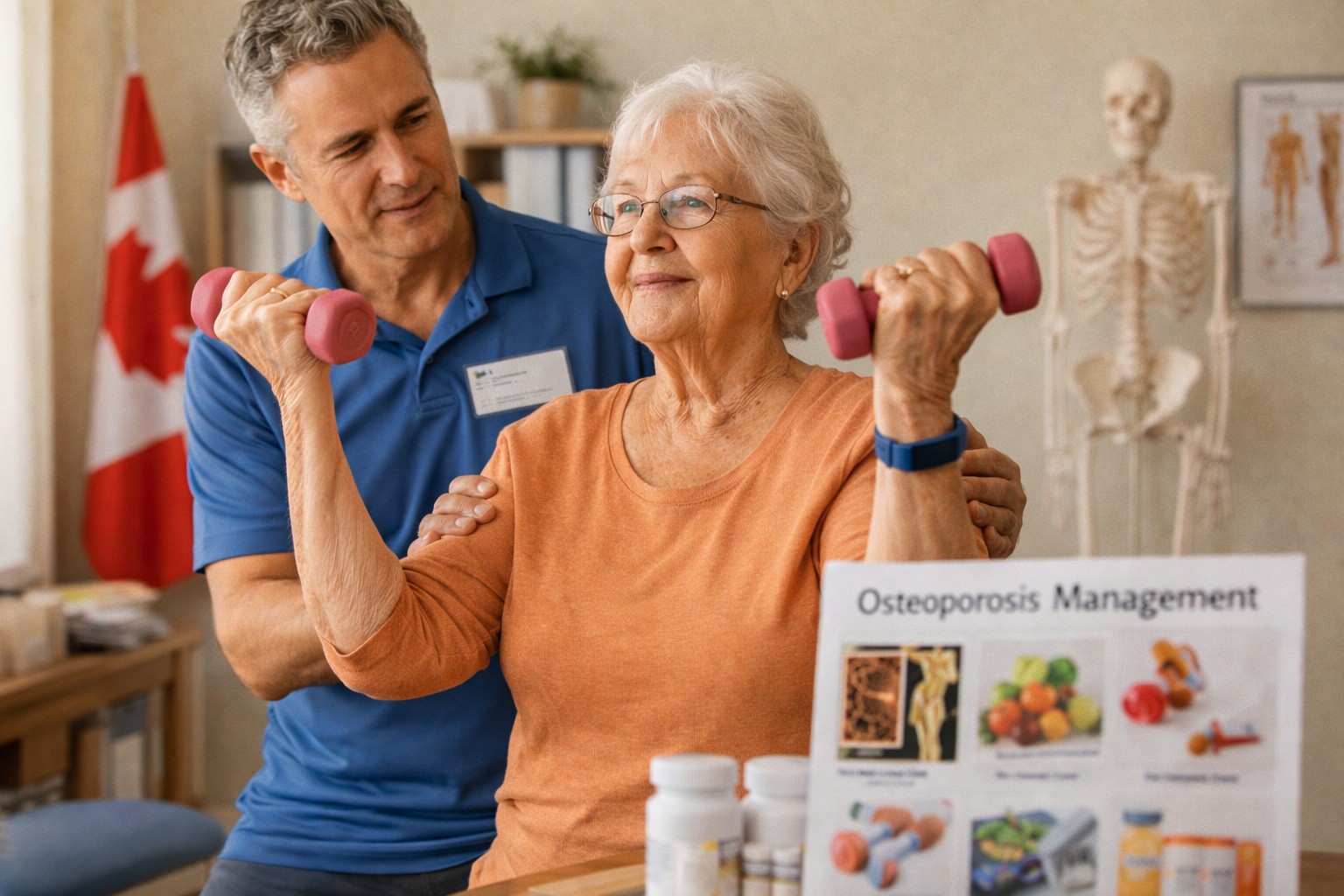
Sarcopenia: Leucine-rich protein 1.2-1.6g/kg, progressive resistance training 2-3x/week.
4. What lifestyle interventions prevent and reverse bone/muscle loss?
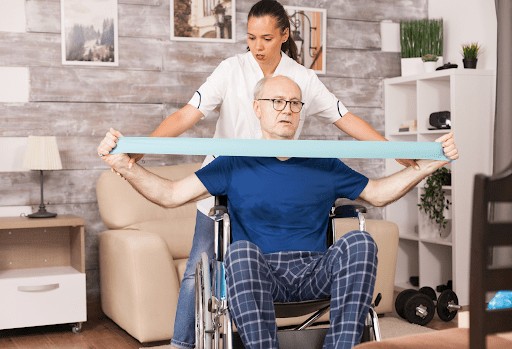
Exercise: Weight-bearing (walking 30min/day), resistance training (squats, bands), balance (tai chi 2x/week reduces falls 50%). Protein timing: 25-40g/meal stimulates synthesis.
Nutrition: Vitamin K (leafy greens), magnesium (nuts), omega-3s reduce inflammation. Fall-proof home: Night lights, grab bars, declutter.
Screening: Women 65+, men 70+, earlier if risk factors.
5. How do home care services support seniors with osteoporosis and sarcopenia?
Caregiver assistance: Safe transfers, exercise supervision, meal prep (protein-rich). Physiotherapy coordination, fall risk assessments. Medication reminders (bone drugs timing critical).
Ontario falls prevention programs, community exercise classes funded. Private agencies provide post-fracture rehab aides.
Protect your loved one from fractures and falls—our osteoporosis-trained caregivers specialize in safe mobility and strength support. Schedule your FREE Ontario bone health assessment today! Call [your number] to prevent the next fall!