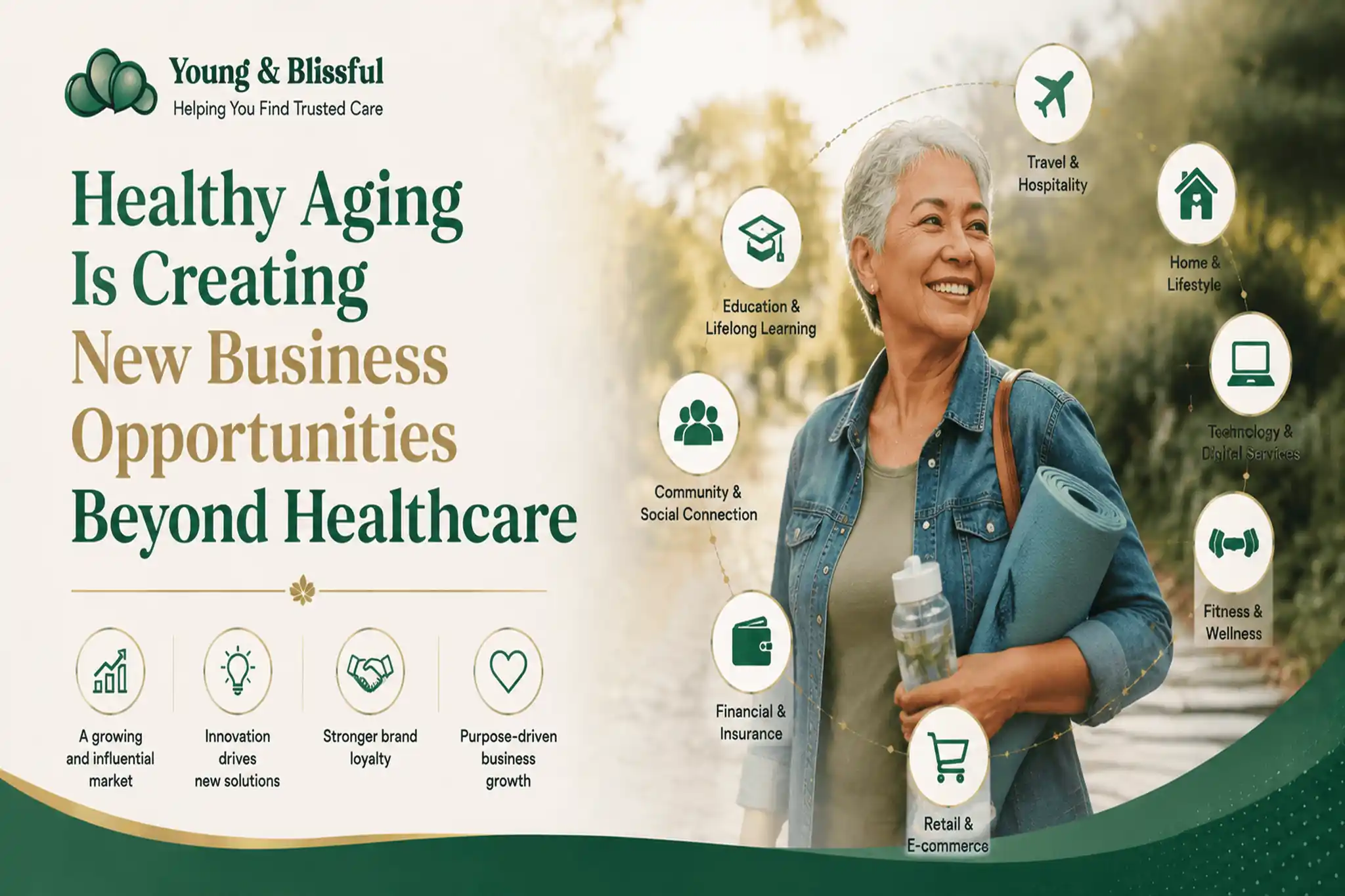
When people hear the phrase healthy aging, they often think first about hospitals, medical appointments, or long-term care. Those services matter, but healthy aging creates demand far beyond healthcare. In Ontario, older adults and caregivers also need support with safer homes, easier transportation, technology use, planning, social connection, nutrition, movement, financial organization, and daily living routines.
That shift creates a much wider business opportunity. Healthy aging is really about helping people stay independent, connected, informed, and supported for longer. Businesses that solve practical problems around aging can become essential to families even if they do not identify as healthcare providers. The strongest opportunities often sit in the gaps between a medical need and everyday life.
Quick Answer
- Healthy aging is not only a healthcare issue. It shapes demand for safer homes, easier transportation, better technology support, stronger social connection, and more practical daily living services.
- Ontario businesses can find new growth opportunities by solving real-life problems for seniors and caregivers, especially problems related to access, convenience, safety, and planning.
- The strongest opportunities often come from helping people stay independent longer, reduce caregiver strain, or navigate important life transitions more smoothly.
- Businesses do not need to call themselves senior specialists to participate, but they do need to make their services easier for older adults and families to understand and trust.
Healthy aging creates demand for support in everyday life
Healthy aging is often discussed as a medical or public health issue, but for families it is also deeply practical. It shows up in questions such as: Can a parent still manage stairs safely? Who can help after a small health setback? How will someone get to appointments? What happens when technology becomes a barrier instead of a tool?
Each of those questions creates business demand outside traditional healthcare. Transportation companies, contractors, meal providers, fitness professionals, home organizers, technology helpers, and wellness businesses all become part of the healthy aging picture when they solve daily-life problems well.
Where new opportunities are emerging
Housing is one of the clearest opportunity areas. Families need help with downsizing, relocation, accessibility upgrades, safer bathrooms, better lighting, and home maintenance. Aging in place often depends on many small adjustments rather than one dramatic change.
Technology is another large opportunity. Older adults and caregivers may need help with smartphones, video calling, online forms, scam prevention, portal access, reminders, emergency alerts, and smart-home tools. Businesses that make technology feel calmer and more usable can build strong trust.
Transportation remains essential as well. A senior may still live independently but need reliable support for appointments, errands, or social activities. Transportation issues can quickly become isolation issues, health issues, and caregiver stress issues.
Healthy aging is also about prevention and participation
There is a tendency to think about aging only when there is already a problem. In reality, many families look for services that help prevent bigger problems. That could include home safety assessments, balance-focused fitness, meal planning, social programs, therapy, caregiver coaching, or community support that keeps someone connected and active.
Businesses that understand prevention can communicate their value more effectively. They are not only solving emergencies. They are helping preserve independence, confidence, and routine before stress becomes a crisis.
Why businesses should think in ecosystems, not silos
An older adult’s needs rarely fit inside one category. Someone recovering from a health change may need transportation, mobility support, home modifications, mental health support, meal help, and legal or financial planning. These needs often unfold in sequence rather than all at once.
That is why ecosystem thinking matters. Businesses that understand related services can guide families more responsibly, build better referral relationships, and create a smoother experience. Collaboration becomes a growth strategy, not just a nice idea.
Common mistakes businesses make in this area
Some businesses assume they need to create a completely separate senior brand. Often, that is not necessary. A better first step is to make the current offer clearer, more accessible, and more obviously relevant to older adults and caregivers.
Another mistake is speaking only in benefits and not in real situations. Families respond more strongly when they can see when a service may help: after a fall, after a hospital visit, during caregiver overwhelm, during downsizing, or when transportation becomes unreliable.
What healthy-aging-ready businesses do well
They describe services in plain language. They explain when the service may be useful. They make it easy to ask questions. They understand that family involvement may matter. They show service area clearly. They remove practical barriers instead of assuming people will work harder to figure things out.
Healthy-aging-ready businesses also understand that dignity matters. Older adults want support that feels respectful, not infantilizing. Caregivers want help that feels realistic, not vague. Businesses that strike that balance stand out.
Action Steps for Ontario Businesses
A useful place to start is to identify which healthy aging problems your business already helps solve. It may reduce falls, save time, improve comfort, make communication easier, support transportation, or decrease caregiver workload. Naming that problem clearly can make a business far easier for seniors and families to understand.
Next, review whether your offer is designed for real use. Can someone book or ask a question easily? Is the service area obvious? Does the website explain whether the service is in-home, community-based, virtual, or location-based? Healthy aging opportunities are often won by businesses that are more usable, not simply more visible.
Businesses should also look for collaboration opportunities with providers in nearby categories. Healthy aging support often works best when services connect. A stronger network can create a stronger customer experience and more durable referral flow.
How to Compare Providers Before You Contact Them
Older adults and caregivers often compare providers by asking practical questions first: does this service help with the immediate problem, is it offered nearby, what does the first step look like, and does the provider sound comfortable working with seniors?
Businesses that answer those questions openly give families a better starting point and reduce confusion early.
Where leaders can find their strongest niche
Many businesses do not need to target “all seniors.” A better strategy is to identify one clear niche within healthy aging. That could be safer bathing, transportation to appointments, digital support for adult children, caregiver-friendly meal planning, or exercise for balance and confidence.
Niche positioning makes messaging clearer and often improves referrals. It helps healthcare providers, community organizations, and families understand when to think of your business and how your offer fits into the wider support journey.
Once the niche is clear, businesses can expand outward. Starting narrow often leads to stronger visibility than trying to sound useful for everyone from the beginning.
Provider Checklist
- Is the business easy to understand within the first few seconds of landing on the page?
- Does the website clearly say who the service is for and which Ontario areas are served?
- Can a senior, caregiver, or adult child understand the next step without guessing?
- Is contact information easy to find on both desktop and mobile?
- Are service descriptions practical, specific, and free of vague jargon?
- Does the business show trust signals such as reviews, experience, or relevant credentials where appropriate?
- Can caregivers or adult children be included in planning or first-contact conversations?
- Does the intake process reduce friction instead of adding it?
Related Services to Explore on Young & Blissful
- Transportation: helpful when mobility is stable enough for community life but getting around safely is becoming harder.
- Technology Help for Seniors: helpful when devices, alerts, reminders, or communication tools can support independence.
- Mobility & Accessibility: helpful when equipment or home safety products may reduce risk.
- Housing, Retirement & Long-Term Care: helpful when home is no longer the right fit or future planning is becoming urgent.
FAQs
What does healthy aging mean for businesses?
Healthy aging means helping older adults maintain independence, safety, participation, and quality of life. For businesses, that creates demand well beyond direct medical care.
Which industries benefit from healthy aging trends?
Housing, home maintenance, transportation, legal planning, financial planning, wellness, accessibility, nutrition, community programs, and technology all have opportunities.
Why does aging in place matter so much?
Many older adults and families prefer support that helps them remain at home safely for longer. That increases the need for home-related services, modifications, transportation, and daily support.
Can non-healthcare businesses still market to seniors and caregivers?
Yes, if the service is relevant and presented clearly. Families often need practical support, not just healthcare support.
What are the biggest mistakes businesses make?
Common mistakes include unclear messaging, poor accessibility, not showing senior experience, and ignoring the role of caregivers and adult children.
How should businesses start?
Start by identifying where your service reduces stress, saves time, improves safety, or supports independence for older adults and families. Then communicate that value in simple language.
Key Takeaways
- The Ontario aging market affects more than healthcare and should be treated as a strategic business opportunity.
- Seniors rarely make decisions in isolation. Caregivers, spouses, and adult children often influence the final choice.
- Trust, accessibility, clarity, and ease of comparison matter strongly in senior-related decision-making.
- Businesses that reduce friction often improve both customer experience and conversion performance.
- Young & Blissful can act as a marketplace starting point for families comparing local senior-focused services across Ontario.
Conclusion + Soft CTA
Healthy aging is expanding demand across many sectors, not only direct care. Businesses that support independence, safety, convenience, and caregiver relief are becoming more relevant in Ontario’s aging economy. If your organization helps older adults or families navigate these needs, Young & Blissful can help people explore local options by category, location, and service type.