Hospital-to-home care in Ontario helps seniors return home safely after a hospital stay. Families should plan transportation, medications, wound care, mobility support, meals, bathroom safety, follow-up appointments, and home care before discharge day. The first few days at home are often when families notice the biggest gaps.
This guide is for adult children, spouses, caregivers, and seniors who need a clear discharge checklist after a hospital stay.
Ontario is investing in home and community care, including the Hospital to Home program. The 2026 Ontario Budget says the province is investing an additional $1.1 billion over three years for more home and community care services, after earlier funding to sustain and expand Hospital to Home.
Quick Answer
- Hospital-to-home care means support after discharge so a senior can recover safely at home.
- Ontario Health atHome may be involved if the hospital care team decides in-home or community supports are needed after discharge.
- Families should ask for a written transition plan before leaving hospital, including transportation, medication, and care instructions.
- Common support needs include PSW help, nursing, medication support, mobility help, meals, transportation, and follow-up appointments.
- Young & Blissful can help families compare local senior-care and post-hospital support providers across Ontario.
What Is Hospital-to-Home Care in Ontario?
Hospital-to-home care is support that helps a person move from hospital back to their home, retirement residence, assisted living setting, or other usual place of residence. This move is often called a hospital discharge. Ontario Health’s quality standard explains that transitions between hospital and home require coordination between the patient, caregivers, hospital team, primary care, and home and community care providers.
For seniors, hospital-to-home care may include:
- Nursing
- Personal support
- Physiotherapy
- Occupational therapy
- Medication support
- Medical supplies or equipment
- Meal help
- Transportation
- Community support services
Ontario Health atHome says that when a parent is being discharged, the hospital care team may include an Ontario Health atHome care coordinator to decide whether in-home or community supports are needed. These supports may include nursing, personal support, medication management, rehabilitation, and other services.
Why Discharge Planning Matters for Seniors and Families
Discharge planning matters because hospital recovery does not end at the hospital door. A senior may be medically ready to leave hospital but still need help with bathing, dressing, meals, walking, stairs, wound care, medication routines, and follow-up appointments.
Ontario Health atHome advises families to ask the health care team what changes to expect at home and what support will be needed. The same discharge resource notes that people may need help with personal care, taking medication, using equipment, housekeeping, getting to medical appointments, and other daily activities.
For adult children, the key question is simple:
What needs to be ready before the senior walks through the front door?
That includes the ride home, the bed setup, the bathroom, medications, meals, equipment, and who will be present during the first 24 to 72 hours.
Hospital Discharge Checklist for Adult Children
Use this checklist before discharge day whenever possible.
1. Confirm the Transportation Plan
Ask the hospital team:
- What time is discharge expected?
- Can the senior sit in a regular car?
- Do they need wheelchair-accessible transportation?
- Will someone help them from the hospital room to the vehicle?
- Will someone help them from the vehicle into the home?
- Are stairs, elevators, icy walkways, or long hallways a concern?
Do not assume a regular family car will work. After surgery, illness, a fall, or a long hospital stay, getting in and out of a vehicle may be difficult.
If you are searching for senior transportation near me in Ontario, compare providers based on wheelchair access, door-to-door support, wait time, and whether a caregiver can ride along.
2. Review the Medication List
Before leaving hospital, ask for the updated medication list. Check what has changed.
Ask:
- Which medications are new?
- Which medications were stopped?
- What time should each medication be taken?
- Are there side effects to watch for?
- Should any medication be taken with food?
- Does the family doctor or pharmacy have the updated list?
- Should the pharmacy prepare blister packs?
Ontario Health’s hospital-to-home quality standard includes medication review and support as part of safe transitions between hospital and home.
Families should not stop, restart, or change medication without speaking with a doctor, nurse practitioner, or pharmacist.
3. Ask About Wound Care or Nursing Needs
If the senior had surgery, an injury, a pressure sore, IV treatment, injections, or dressing changes, ask who is responsible for care at home.
Ask:
- Does a nurse need to visit?
- How often should dressings be changed?
- What supplies are needed?
- Who provides the supplies?
- What signs should be reported?
- Who should the family call after hours?
Ontario Health atHome says home care services may include nursing and medical supplies or equipment, depending on assessment and care needs.
If wound care is needed, get instructions in writing. Keep the phone numbers for the care coordinator, clinic, doctor, or nursing provider in one place.
4. Plan for Mobility Help
Mobility can change after a hospital stay. A senior who walked independently before admission may now need a walker, cane, wheelchair, transfer help, or supervision.
Check:
- Can they get out of bed safely?
- Can they use the toilet safely?
- Can they climb stairs?
- Can they shower or bathe?
- Do they need help standing from a chair?
- Are rugs, cords, pets, or clutter in the way?
- Is there enough lighting at night?
An occupational therapist or physiotherapist may help assess mobility, equipment, transfers, and home safety. Ontario Health atHome lists physiotherapy and occupational therapy among possible home care services after assessment.
5. Prepare Meals and Groceries
Many families focus on medical tasks and forget meals. But food and hydration are part of recovery.
Before discharge, arrange:
- Groceries for three to seven days
- Easy meals that can be reheated
- Water within reach
- Snacks if appetite is low
- Help with cooking if standing is difficult
- Meal delivery if family cannot visit daily
Ontario Health atHome notes that community supports may include meal delivery and transportation services.
Meal help may come from family, community programs, private caregivers, or prepared meal providers.
6. Check Bathroom and Home Safety
The bathroom is one of the most important places to review before discharge.
Check whether the senior needs:
- Grab bars
- Non-slip bath mat
- Shower chair
- Raised toilet seat
- Handheld shower head
- Clear path to the bathroom
- Night lights
- Help with bathing
- Help with toileting
- Emergency call button or phone access
For higher-risk situations, consider an occupational therapy home safety assessment. This can help families plan changes for bathing, toileting, stairs, transfers, and equipment.
7. Book Follow-Up Appointments
Before leaving hospital, ask what appointments are needed.
This may include:
- Family doctor
- Surgeon
- Specialist
- Bloodwork
- Imaging
- Pharmacy review
- Wound clinic
- Physiotherapy
- Occupational therapy
- Nursing clinic
Ontario Health’s quality standard says transition planning should include clear communication between hospital, primary care, home and community care providers, and specialists. It also identifies follow-up medical care as part of safe transitions.
Write down appointment dates, transportation plans, and who will attend with the senior.
8. Decide When to Hire Home Care
Families often ask, “When should we hire home care after discharge?”
Consider home care if the senior needs help with:
- Bathing
- Dressing
- Toileting
- Transfers
- Walking
- Meal preparation
- Medication reminders
- Companionship
- Light housekeeping
- Overnight supervision
- Caregiver respite
- Post-hospital routines
Private home care may be useful while waiting for public support, when public care does not cover all hours, or when the family needs extra help during the first few days at home.
If the senior’s needs are medical, ask whether a regulated health professional is required.
How to Compare Providers Before You Contact Them
Before calling providers, compare the basics. This helps families move quickly after discharge.
Look at:
- Location and service area: Does the provider serve your part of Ontario?
- Availability: Can they start today, tomorrow, evenings, or weekends?
- Experience with seniors: Do they support older adults after hospital stays?
- Services offered: Do they provide PSW care, nursing, transportation, meals, respite, or therapy?
- In-home, clinic, virtual, or hybrid options: What format works for the senior?
- Pricing transparency: Are hourly rates, minimum hours, and cancellation rules clear?
- Reviews or ratings: Can families see feedback?
- Credentials and safety: Are training, insurance, screening, or licensing details explained where relevant?
- Communication quality: Will they update adult children or caregivers?
- Caregiver support: Do they include family members in planning?
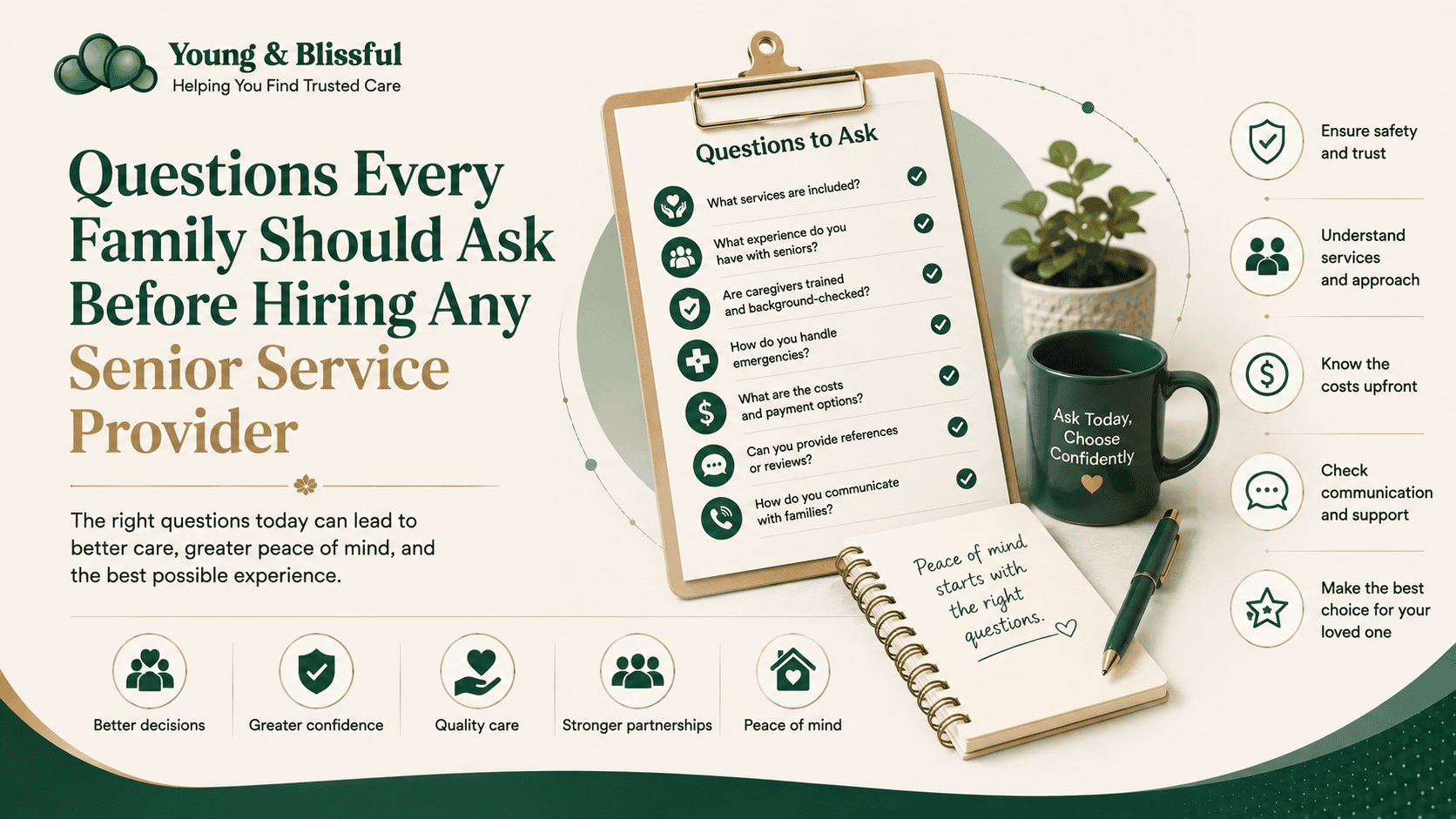
You can use Young & Blissful to compare providers by category, location, availability, and service type across Ontario.
Services You May Want to Compare
For hospital-to-home care in Ontario, families may want to compare:
- Home Care & Personal Support: PSW help with bathing, dressing, mobility, toileting, meals, and companionship.
- Medical & Dental Care: Nursing, wound care, medication review, family doctor follow-up, pharmacy support, and clinic care.
- Physiotherapy & Occupational Therapy: Mobility support, transfer training, home safety assessments, and equipment recommendations.
- Transportation Services: Discharge rides, medical appointment transportation, and wheelchair-accessible options.
- Daily Living & Lifestyle Support: Meal help, errands, groceries, housekeeping, and companionship.
- Mobility & Accessibility: Walkers, wheelchairs, grab bars, shower chairs, ramps, and emergency alert systems.
Not every senior needs every service. Start with the tasks that are unsafe, urgent, or difficult for the family to manage alone.
Costs and Considerations in Ontario
Costs vary by provider, location, care level, schedule, and service type. Private PSW care may be billed hourly. Transportation may be billed by trip, distance, or time. Nursing, physiotherapy, occupational therapy, and equipment may have different pricing depending on the provider and whether services are publicly funded, privately paid, or covered by benefits.
Ontario Health at Home says it provides a range of services and resources covered through OHIP, based on assessment, including nursing, personal support, physiotherapy, occupational therapy, speech-language therapy, social work, nutrition counselling, and some medical supplies and equipment. Some fees may apply for supplies and equipment.
Ask each provider:
- What is included?
- What costs extra?
- Is there a minimum visit length?
- Can services start short-term?
- Can care be paused or changed?
- Are receipts provided?
- Is insurance or benefits billing available?
- What happens if the regular caregiver is unavailable?
Do not assume public, private, and insurance-covered services work the same way. Always confirm current coverage and fees with the provider, Ontario Health atHome, or the insurance plan.
Tips for Seniors, Caregivers, and Adult Children
Start planning before discharge day. Ask questions while the senior is still in hospital.
Keep one folder for:
- Discharge papers
- Medication list
- Appointment dates
- Care coordinator contact
- Provider phone numbers
- Wound care instructions
- Equipment instructions
- Emergency contacts
Try to have someone stay with the senior for the first night if possible. Many issues show up after the first trip to the bathroom, first meal, first medication dose, or first attempt to get into bed.
If you are searching for hospital to home care Ontario or home care near me, compare providers in your city and nearby communities. Families in Toronto, North York, Scarborough, Mississauga, Brampton, Markham, Vaughan, Hamilton, Ottawa, Durham Region, Kitchener-Waterloo, and Niagara Region may find different availability and service options.
Common Mistakes to Avoid
Leaving without a clear medication list.
Medication changes are common after hospital stays. Ask for the updated list and review it with a pharmacist or qualified professional.
Assuming the senior can move the same way as before.
Strength, balance, and confidence may change after illness, surgery, or bed rest.
Forgetting the bathroom.
Bathing and toileting are often the first safety issues at home.
Not arranging transportation for follow-up appointments.
A discharge ride is only the first trip. Follow-up care may require several more rides.
Waiting too long to ask for help.
If bathing, meals, transfers, or medications are not manageable, compare home care or community support early.
Not involving the senior.
Include the senior in decisions about privacy, schedule, language, culture, comfort, and who enters the home.
Provider Checklist
Use this checklist before choosing a post-hospital care provider in Ontario:
- Does the provider serve your city or neighbourhood?
- Can they start when the senior is discharged?
- Do they work with seniors after hospital stays?
- Do they support the specific need: bathing, dressing, meals, transportation, mobility, wound care, or medication reminders?
- Are services in-home, clinic-based, virtual, or hybrid?
- Are prices, minimum hours, and cancellation rules clear?
- Are credentials, licensing, insurance, or safety checks explained where relevant?
- Are reviews or ratings available?
- Can they communicate with adult children or caregivers?
- Do they offer backup staff if someone is sick?
- Can the care plan change as the senior improves?
- Is the service appropriate for the senior’s health, mobility, memory, language, culture, and comfort level?
Related Services to Explore on Young & Blissful
- Home Care & Personal Support — PSW care, bathing help, dressing support, meal preparation, companionship, respite, and post-hospital support.
- Medical & Dental Care — nursing, wound care, pharmacy support, medication review, and follow-up care.
- Physiotherapy & Occupational Therapy — mobility support, home safety assessments, transfer help, and recovery planning.
- Transportation Services — discharge rides, appointment transportation, and accessible transportation.
- Daily Living & Lifestyle Support — meal help, groceries, errands, housekeeping, and companionship.
- Mobility & Accessibility — walkers, wheelchairs, grab bars, shower chairs, ramps, and bathroom safety equipment.
FAQs
What is hospital-to-home care in Ontario?
Hospital-to-home care is support that helps a person return home after a hospital stay. It may include nursing, personal support, medication help, rehabilitation, transportation, meals, and home safety support.
What should families ask before hospital discharge?
Ask about medications, wound care, mobility, equipment, bathing, transportation, follow-up appointments, warning signs, and who to call if symptoms change. Also ask for written discharge instructions.
Does Ontario provide home care after hospital discharge?
Ontario Health atHome may help arrange publicly funded home and community care after assessment. The hospital care team may involve a care coordinator if in-home or community supports are needed for discharge.
When should I hire private home care after discharge?
Private home care may help if the senior needs support before public services begin, needs more hours than publicly funded care provides, or needs help with personal care, meals, mobility, reminders, or respite.
Can a PSW help after a hospital stay?
Yes, a PSW may help with personal care, dressing, bathing, mobility, meals, companionship, and daily routines. Medical tasks may require a nurse or another regulated health professional.
What equipment might a senior need after discharge?
Common equipment may include a walker, cane, wheelchair, shower chair, raised toilet seat, grab bars, hospital bed, or emergency alert system. Ask the hospital team or an occupational therapist what is appropriate.
How do caregivers compare hospital-to-home providers?
Compare service area, availability, senior-care experience, services offered, pricing, reviews, credentials, communication, and whether the provider can support urgent post-discharge needs.
Key Takeaways
- Hospital-to-home care helps seniors return home safely after discharge.
- Families should confirm transportation, medications, wound care, mobility, meals, bathroom safety, and follow-up appointments before discharge.
- Ontario Health atHome may help arrange public home and community care after assessment.
- Private home care can help fill gaps during the first days or weeks at home.
- Medication changes should be reviewed with qualified professionals.
- Bathroom safety, mobility, and meals are often the biggest early challenges.
- Young & Blissful can help families compare post-hospital support providers across Ontario.
Conclusion + CTA
A hospital discharge can happen quickly. A simple checklist helps families feel more prepared and reduces missed details.
Before the senior comes home, confirm the ride, medications, wound care, mobility support, meals, bathroom safety, follow-up appointments, and who will help during the first few days.
Young & Blissful helps seniors, caregivers, and adult children explore local senior-care services across Ontario. You can compare Home Care & Personal Support, Medical & Dental Care, Transportation, Occupational Therapy, Daily Living Support, and Mobility providers near you.