Choosing the right senior care option is one of the biggest decisions families make. In Ontario, many people compare home care vs retirement homes when a parent, spouse, or loved one starts to need more help. The right choice depends on health needs, budget, safety, and the senior’s preference for independence.
Quick answer: Home care is often best for seniors who want to stay in their own home and only need support with daily tasks. Retirement homes may be better for seniors who want more structure, meals, social support, and on-site services.
What is the difference between home care and retirement homes?
Home care means support is brought to the senior’s home. This may include help with bathing, meal preparation, companionship, medication reminders, mobility support, and light housekeeping.
A retirement home is a residential setting where seniors live in a private or semi-private suite and receive varying levels of care and support. Many retirement homes also offer meals, recreation, housekeeping, and optional personal care services.
The biggest difference is location. Home care lets the senior remain at home. Retirement homes provide care in a structured community setting.
What is home care?
Home care is flexible and can be customized to each senior’s needs. It can be part-time, daily, or live-in depending on the provider. Families often choose home care when a senior is still fairly independent but needs help with certain tasks.
Common home care services include:
- Personal care
- Meal support
- Companionship
- Transportation
- Mobility assistance
- Dementia support
- Respite for family caregivers
What is a retirement home?
A retirement home is designed for older adults who want more support than they can manage alone, but who do not require a long-term care home. These homes often include meals, activities, housekeeping, and emergency response systems.
Some retirement homes offer independent living, while others provide assisted living-style care. The level of support can vary from one residence to another.
Which option is better for seniors in Ontario?
There is no single answer for every family. The best option depends on how much help is needed, how safe the current home environment is, and how much daily oversight is required.
When home care is the better choice
Home care may be the better fit if:
- The senior wants to stay in familiar surroundings.
- The senior needs only a few hours of help each day.
- Family members are already helping and need extra support.
- The person is emotionally attached to their home.
- The budget is better suited to flexible care hours.
Home care is often ideal for seniors who are still mobile and mostly independent, but need help with daily routines.
When a retirement home is the better choice
A retirement home may be the better fit if:
- The senior is lonely or socially isolated.
- Meals, housekeeping, and daily structure are becoming difficult.
- Safety at home is a concern.
- Family caregivers are overwhelmed.
- The senior needs regular supervision and support.
Retirement homes can also be helpful when families want a simpler, all-in-one solution with predictable services.
What services do each provide?
The services in each option can overlap, but they are delivered differently.
Services included in home care
Home care may include:
- Bathing and grooming support
- Meal preparation
- Medication reminders
- Companionship
- Exercise or mobility assistance
- Light housekeeping
- Support after surgery or illness
- Dementia-friendly care
This makes home care a good option for families who want personalized support without moving the senior.
Services included in retirement homes
Retirement homes may include:
- Private or shared suites
- Meals and snacks
- Housekeeping
- Laundry
- Social activities
- Wellness programming
- On-site care services
- Emergency call systems
Some homes offer a more lifestyle-focused environment, while others provide more hands-on daily support.
How much do home care and retirement homes cost in Ontario?
Cost is one of the biggest factors in the decision. In Ontario, prices can vary widely based on location, care level, and provider type.
Home care cost in Ontario
Home care is usually charged by the hour. Costs can rise if care is needed evenings, weekends, or overnight. Live-in care is more expensive but may still cost less than a residence in some situations.
The benefit of home care is flexibility. Families pay for the time and services they actually need.
Retirement home cost in Ontario
Retirement homes usually charge a monthly fee. That fee may include rent, meals, housekeeping, and some care. Additional services may cost extra.
Pricing often depends on:
- Suite size
- Level of care
- Meal plans
- Location
- Amenities
- Extra personal care services
In cities like Toronto, Mississauga, and Ottawa, retirement home costs can be significantly higher than in smaller Ontario communities.
What affects pricing?
Several things affect the total cost:
- Number of care hours needed
- Daytime vs overnight support
- Special care needs
- Urban vs suburban location
- Staff availability
- Private vs shared accommodation
Families should compare total monthly costs, not just the base rate.
How do you choose the right provider in Ontario?
Choosing the right provider means looking beyond price. You want care that is safe, reliable, and respectful.
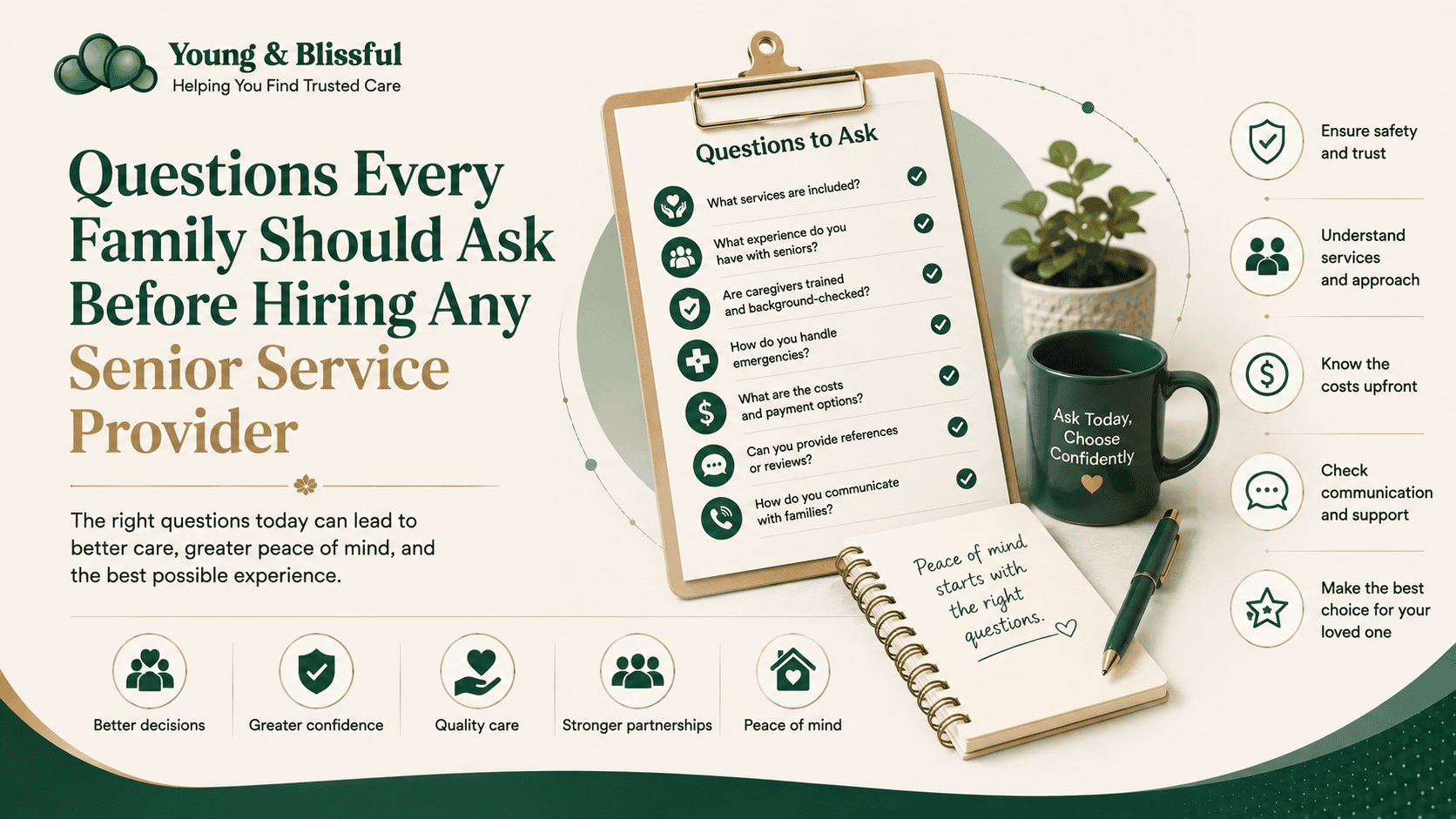
Questions to ask
- What services are included?
- Are staff trained and screened?
- Can care be increased if needs change?
- What are the monthly or hourly costs?
- Is there a clear care plan?
- How quickly can services start?
What to look for
A good provider should offer:
- Clear communication
- Transparent pricing
- Flexible care options
- Good local reputation
- Personalized support
- Respect for senior dignity and choice
If you are comparing services, a trusted Ontario directory like Young & Blissful Marketplace can help you find verified providers and explore care options near you.
Common mistakes families make
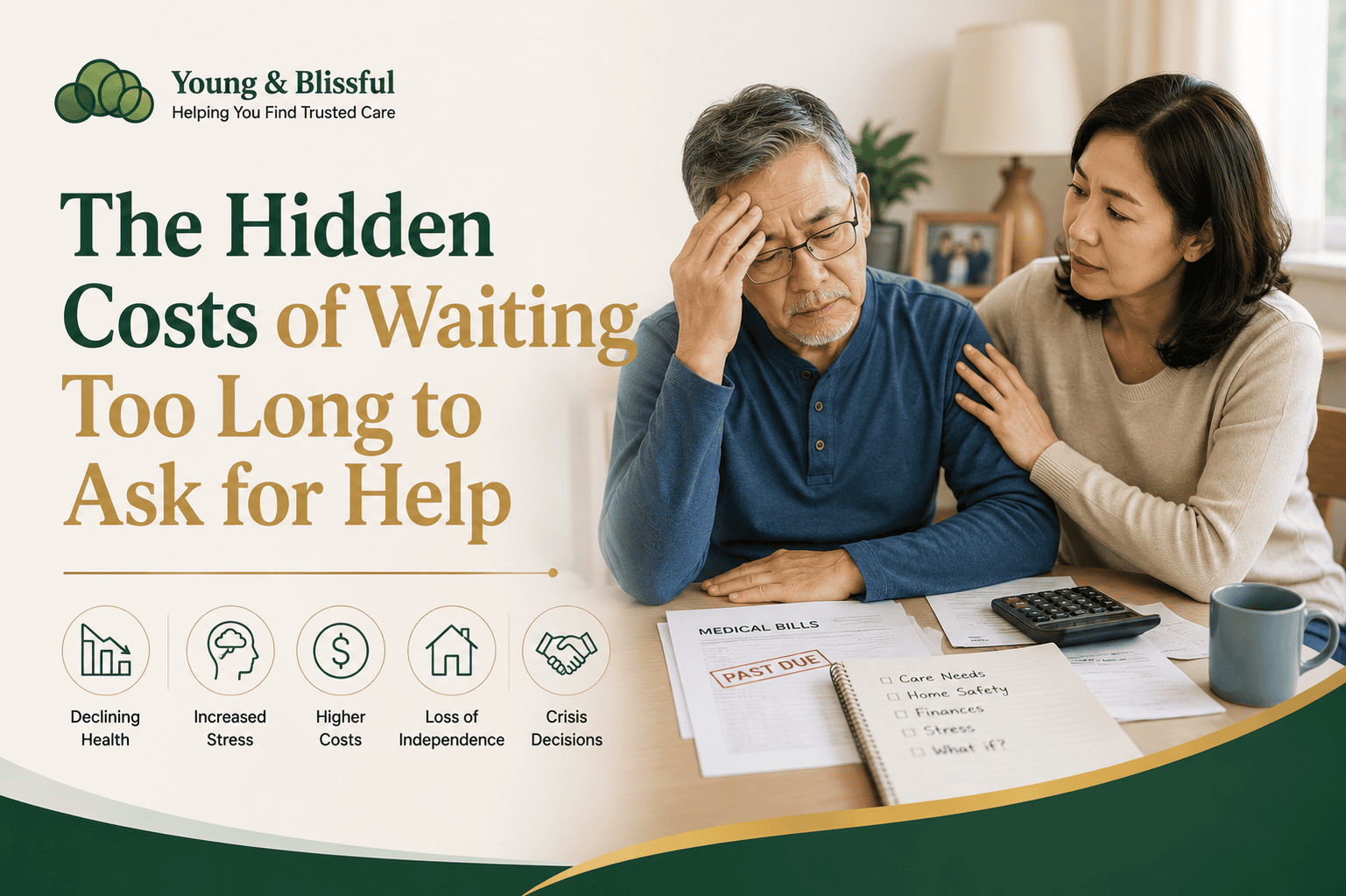
Many families wait too long before getting help. This can lead to falls, burnout, stress, or a crisis hospitalization.
Waiting too long
It is better to start support early before the situation becomes urgent. Small problems can become bigger quickly.
Choosing based on price only
The cheapest option is not always the best. Quality, safety, and reliability matter just as much.
Not comparing providers
Families should always compare more than one provider. Service quality, flexibility, and fit can vary a lot.
FAQ
1. Is home care cheaper than a retirement home in Ontario?
Not always. Home care can be cheaper for part-time support, but costs may rise if the senior needs many daily hours.
2. Can retirement homes provide medical care?
Some provide personal care and wellness support, but they are not the same as long-term care homes or hospitals.
3. Is home care good for dementia?
Yes, especially when care is consistent and the caregiver understands memory support and routine.
4. Can seniors switch from home care to retirement homes later?
Yes. Many families begin with home care and move to a retirement home if needs increase.
5. How do I compare providers in Ontario?
Compare services, pricing, reviews, and staff qualifications. Use a trusted marketplace to narrow the search.
Key Takeaways
- Home care supports seniors in their own home.
- Retirement homes offer a structured living environment.
- The right choice depends on care needs, safety, and budget.
- Ontario families should compare pricing, services, and provider quality.
- Starting early helps prevent crisis decisions.
Conclusion + CTA
Both home care and retirement homes can be the right choice depending on the senior’s needs. If your family is comparing options in Ontario, take time to review care levels, costs, and provider reputation before making a decision.
Explore trusted providers on Young & Blissful Marketplace to compare care options near you in Ontario.